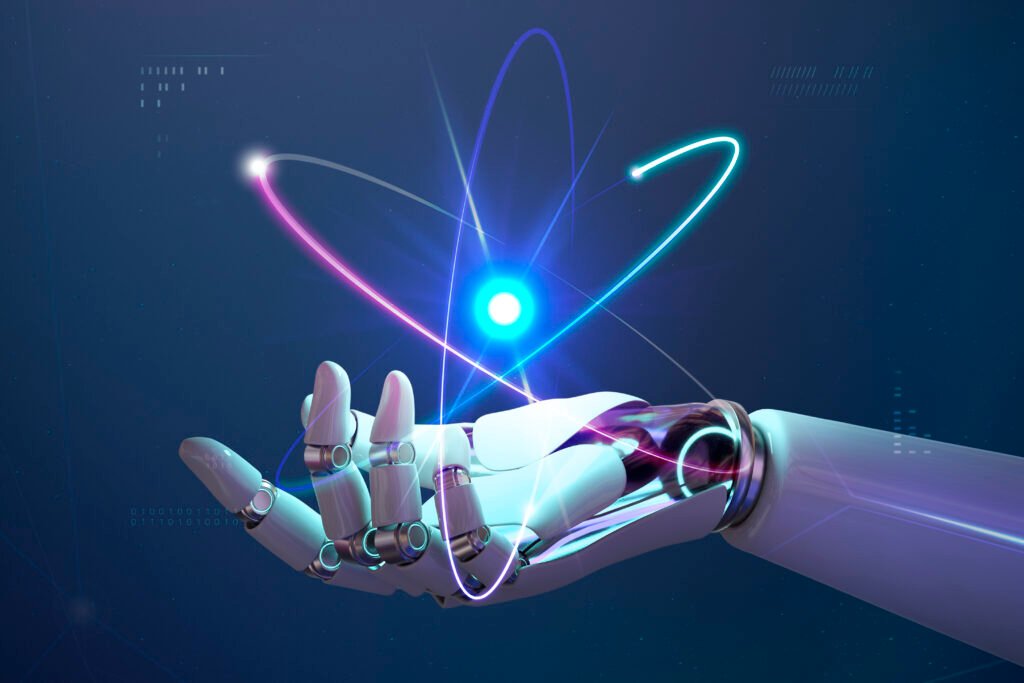
A short history of how an old question in philosophy turned into a working science and, eventually, into something you talk to every day.
Long before computers: Old dreams of a built mind
People imagined thinking machines centuries before anyone had the parts to build one. In Greek myth, the god Hephaestus forges Talos, a bronze giant that patrols the shores of Crete on its own. Jewish folklore tells of the golem, a figure of clay animated by sacred words. By the 1700s, clockmakers across Europe were building automata — mechanical figures that could write letters or play instruments, gears standing in for will.
None of this was science. It was a question the species kept returning to, in every form it had available: could something we build ever think for itself?
1950: A question gets a method
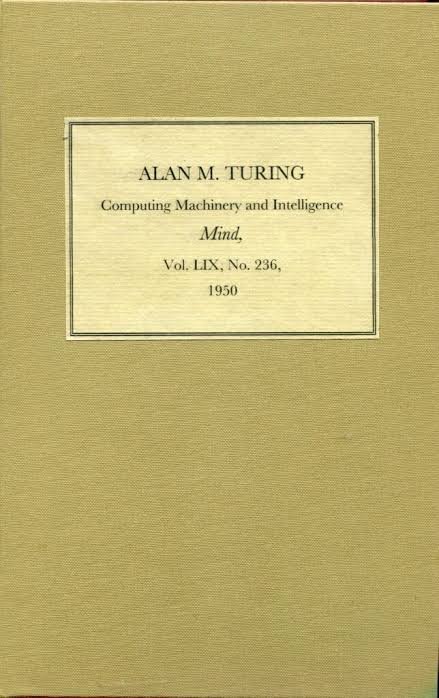
Mathematician Alan Turing gave the question a shape people could actually work with. In his 1950 paper “Computing Machinery and Intelligence,” he set aside the unanswerable version of the question — does a machine *truly* think — and replaced it with a testable one: could a machine hold a conversation well enough that a person couldn’t tell they weren’t talking to another human? That test now carries his name.
Turing’s paper didn’t prove machines could think. It did something arguably more useful: it made the question answerable, one experiment at a time.
Summer 1956, Dartmouth College: The summer the field got its name
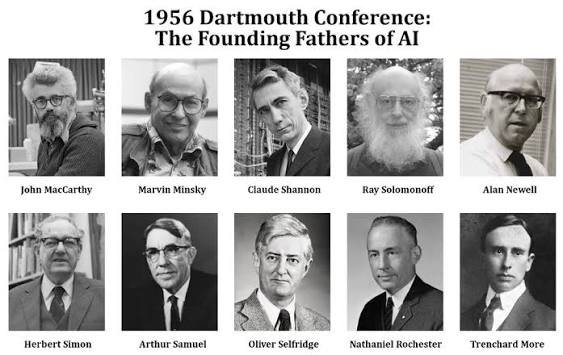
Four researchers — John McCarthy, Marvin Minsky, Nathaniel Rochester, and Claude Shannon — invited a small group of colleagues to Dartmouth for an eight-week workshop. Their proposal made a bold claim: that every aspect of learning or intelligence could, in principle, be described precisely enough for a machine to simulate it.
Nobody cracked intelligence that summer. But the gathering gave the field a name it still carries today — **Artificial Intelligence** — along with a small circle of true believers and a timeline that turned out to be wildly optimistic.
1956–1966: First sparks
The years right after Dartmouth produced the field’s first working programs.
1956 — Logic Theorist
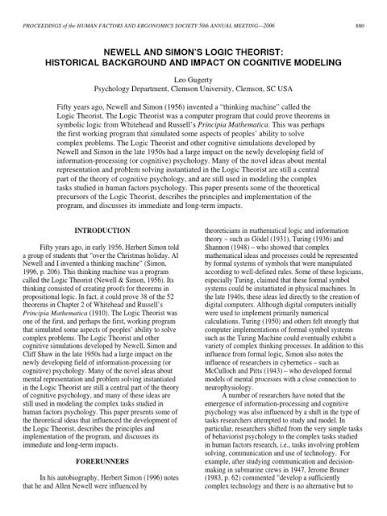
Built by Allen Newell and Herbert Simon, it could prove mathematical theorems on its own — arguably the first true AI program, and proof the Dartmouth claim wasn’t pure fantasy
1966 — ELIZA
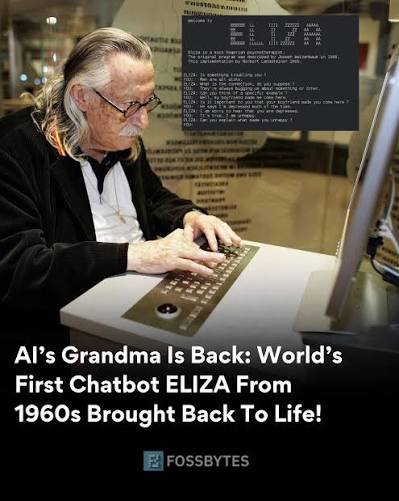
Joseph Weizenbaum’s simple pattern-matching chatbot mimicked a psychotherapist. People confided in it anyway, even knowing it was a program — an early hint at how easily we project understanding onto machines that have none.
The idea had a name and a handful of proofs of concept. Next, it had to survive fifty years of contact with reality.